My asia, Fascinated by Oceania, Civilized Europe, Wild Africca, Across North and South America
联系号码:
邮箱:guiqiangfang@hotmail.com地址:31st Floor, International Technology Building, Shennan Middle Road, Futian District, Shenzhen


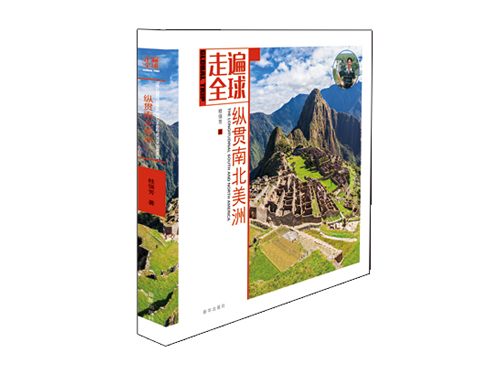
The Americas, usually bordered by the Panama Canal, are divided into North America and South America. North America includes 40 countries and regions with a total area of 24.228 million square kilometers and a total population of 383 million people; South America includes 14 countries and regions with a total area of 17.97 million square kilometers and a total population of 646 million people. Among them, North America is subdivided into Central America and the Caribbean. The American continent is bordered by the Arctic Ocean to the north and Antarctica to the south, with a very wide span of north and south latitudes. Canada is the northernmost country in the Americas, and its territory is the largest in the Americas and the second in the world. Chile is the southernmost country in the Americas. In 1987, I visited the United States for the first time. For more than 30 years, I have traveled to all countries and regions in the Americas. Some countries, such as the United States and Canada, have conducted more than ten inspections over the years. As far as economic development is concerned, the overall development of the Americas is uneven, and the economic strength and development level of various countries are very different. In North America, there is the United States, the world's number one power and a highly developed capitalist country, the world's top ten economies, and Canada, which is a leader in manufacturing and high-tech industries. In South America, Brazil has a relatively high level of development, and South America ranks first in economic aggregate, followed by countries such as Argentina, Chile, and Colombia. In addition, most of the American countries and regions have generally backward economies and low living standards. From the 15th to the 17th centuries, it was called the "geographical discovery" era by Western historians. The rapid economic development of European countries has successively sent navigators to open up new routes and expand their territories. As a pioneer of exploration, Italian navigator Columbus crossed the Atlantic four times with the support of the Spanish royal family and successfully opened a new route from Europe to the Americas. Since then, European countries such as Spain, Portugal, France, and the United Kingdom have successively carried out colonial rule over the American continent. Britain, France, and Spain mainly established colonial strongholds in North America. In the mid-16th century, the North American continent was still a virgin land to be developed. As the earliest colonizer to reach North America, Spain established St. Augustine, the first city in North America on the Florida Peninsula at the southern tip of the North American continent. In the early 17th century, the French arrived in northern North America and established a colony of Quebec. At the same time, Britain also came to the North American continent and began colonial expansion. By the 18th century, Britain had established 13 colonies in North America, including New York, New Jersey, Pennsylvania, and Virginia. Although these 13 colonies are owned by the United Kingdom, they are far away from the British mainland and have implemented different autonomous systems, gradually forming a more cohesive social group. In 1773, Britain promulgated the "Tea Tax Act", imposing a tea tax on the colonized Americans. The colonists were already dissatisfied with the continued exploitation by the British government, and large-scale demonstrations broke out one after another to resist the British government's rule. In 1775, the American colonists fought the British government, which was the American War of Independence. In 1776, representatives of 13 colonies signed the "Declaration of Independence" and the United States was formally declared. These 13 colonies were the first 13 states of the United States. The vast land of the North American continent, rich in natural resources, provided the basic conditions for early economic development. New immigrants are constantly coming from all over Europe, and groups of immigrant groups with different expertise have made great contributions to the reclaiming of North America. Through continuous development, North America has now formed economic regions such as the North American Free Trade Agreement and the Caribbean Community. The various economic regions cooperate with each other to promote a highly integrated North American economic market. Today, North America is mostly developed countries and is the second most developed continent in the world. The colonial powers of South America were mainly Spain and Portugal. South America, a continent with a long history, once created three splendid and prosperous ancient civilizations. One is the Mayan civilization, mainly distributed in southern Mexico, Guatemala, Honduras, El Salvador and Belize; the second is the Inca civilization, mainly distributed in Ecuador, Peru, Bolivia and other countries; the third is the Aztec civilization, mainly distributed in central and southern Mexico. The three major civilizations have made great achievements in the fields of astronomy, calendar, architecture, mathematics, and agriculture. Foreword South America has a deep and advanced civilization heritage, but it was quickly conquered when faced with colonists who came with long guns and short cannons. First, most Americans lived in groups of tribes, and the tribes were separated and separated, and it was not easy to form a unified action, so they could not resist the colonists' raids and elite armed forces. There are also some Americans who are hospitable and hospitable. At first, they didn't know who they would come to. Instead, they treated the colonizers with hospitality. In the end, they were slaughtered by the colonists. Before the opening of the new shipping route, there were about 40 million Indians in the Americas. After the opening of the new shipping route, the population of the Indians was reduced by more than 90% due to killing and hard labor, and they were almost extinct. In addition to the mysterious disappearance of the Mayan civilization, the three major civilizations of the Americas ended in Spain. The colonists opened up plantations, sugar factories, mines, etc. in South America to carry out another round of resource plunder. So far, the development of South America is still affected by the colonial economy. Most countries rely on agriculture and animal husbandry, mainly planting coffee, cocoa, sugar cane and other crops. The economic structure is relatively simple, the production level is relatively low, and the industrial transformation is difficult. The development gap with North America is relatively short. Big. Nowadays, the world tends to be integrated, and the circulation of resources is fast and wide-ranging. The Americas should actively participate in international cooperation and strengthen international exchanges. The so-called backing of big trees is good for the coolness. The United States and Canada are two large countries with strong capital and solid foundations in the north. Other developing countries in the Americas follow closely. They learn and draw lessons from relevant experience, strive to adjust the industrial structure, and promote a diversified economic model.化 development. The civilization of every continent should not be forgotten; the development of every city cannot be ignored. America, a land where modernity and ancient times are intertwined, will surely achieve coordinated development in the gradual convergence.
Gui Qiangfang May 1, 2021
相关标签:
来源:本站
发布时间 : 2021-11-06