
My asia, Fascinated by Oceania, Civilized Europe, Wild Africca, Across North and South America
联系号码:
邮箱:guiqiangfang@hotmail.com地址:31st Floor, International Technology Building, Shennan Middle Road, Futian District, Shenzhen


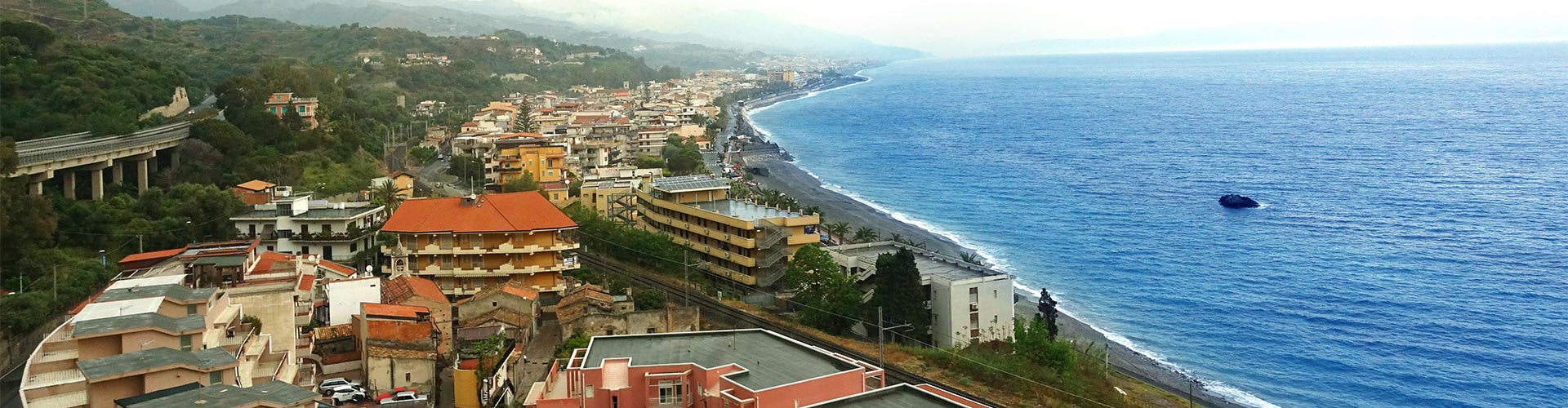
Europe is located at the western end of the Eurasian continent, with a total area of 10.16 million square kilometers, including 46 countries and regions, with a total population of about 733 million people. Among the seven continents in the world, in terms of area, Europe ranks sixth, only higher than Oceania; in terms of population, Europe ranks third, after Asia and Africa. However, in terms of the degree of economic development of countries in the world, Europe is the continent with the highest proportion of developed countries in the world. There are 32 developed countries in the world today, and Europe accounts for 24 seats, including Germany, France, Britain, Italy, the Netherlands, Switzerland and other countries. For 30 years, I have traveled to all countries and regions in the world, and I am currently trying to revisit places that I have only been to once or twice. Comparing the past and the present, like some cities in Asia, it may be difficult to identify if they go there ten years apart, because the development speed is too fast, and the cities are constantly renewed and changed. However, in European countries, even if the interval is as long as 30 years, urban changes are minimal. This is mainly related to Europe's first urbanization process. In the middle of the 18th century, the Industrial Revolution first emerged in the United Kingdom, marking the beginning of Europe's transition from a traditional agricultural economy to an economic structure dominated by industry and service industries. European urbanization has begun with the development of industrialization. The “enclosure movement” initiated by the United Kingdom expanded rapidly, and agricultural production gradually shifted from individual labor to intensive production. On the one hand, production efficiency was greatly improved, and on the other hand, a large number of farmers were forced to “liberate” from the land. These "unemployed" farmers have turned into laborers in the industry and service industries. Industry continues to develop, population is gradually concentrated, and urbanization is rising. The degree of urbanization is measured by the proportion of the urban population in the total population. It is generally divided into three stages: one is the initial stage, where the urbanization level is below 30%; the other is the development stage, where the urbanization level is between 30% and 70%. The third is the mature stage, and the urbanization level is above 70%. Usually, the urban population accounts for 50% of the total population, which means urbanization is achieved. In the mid-nineteenth century, the urban population of the UK had reached 54%, while the entire world's urban population was only 5.4% at that time. By 1901, the urbanization rate in the UK reached 78%, London, with a population of 6.586 million, became the world's largest city, and the UK entered a relatively mature stage of urbanization development. France is a large agricultural country, and the small peasant economy occupies a dominant position, leading to slow development in the early stages of urbanization. In 1880, France's urban population was only 35%. It was not until 1931 that France achieved urbanization. The urbanization process in Germany started late, but developed rapidly. In 1871, the rural population in Germany accounted for 63.9%, and by 1910, the urban population in Germany accounted for 60%. In just 40 years, Germany has reversed the proportions of the rural population and the urban population. The Netherlands, Belgium, Italy, Austria and other countries followed the trend and started urbanization one after another. It can be said that from 1800 to 1900, this one hundred years was a hundred years of Europe's dominance and brilliance in the world. At the beginning of the 20th century, European urbanization construction achieved preliminary results, and many difficulties followed. Due to the rapid development of early urbanization, lack of scientific planning and rational layout, the number of urban populations has surged, resulting in housing shortages, traffic congestion, unemployment and poverty. At the same time, with the development of heavy industry, air pollution and environmental destruction, the urban living environment continues to deteriorate. Social problems such as the spread of diseases and rising crime rates have further intensified, and cities are facing all-round challenges. The two world wars of the 20th century originated in Europe. As the main battlefield, the development of multiple cities in Europe was severely restricted and destroyed. In the final analysis, a city is the living space of people. How to plan and manage the city to meet people's needs is a proposition that needs to be constantly reflected in the process of social development. In order to improve the urban living environment and create sustainable livable spaces, European countries have taken measures to focus on the construction of ecological environment, carry out energy-saving and emission reduction measures, increase the coverage of green land, and shift to ecological economy and environmental protection economy, etc., to fundamentally solve the problem Environmental issues. At the same time, increase the construction of public infrastructure, encourage people to travel by bus, reduce vehicle exhaust emissions, and at the same time alleviate the pressure of traffic congestion. 2 The government strengthens the functions and efficiency of urban management, formulates more scientific and reasonable urban development strategies, and improves related legal systems to gradually overcome urban problems. After the Second World War, the overall urbanization process in Europe slowed down. Modern European civilization has been spawned and promoted in the process of urbanization. So far, Europe has formed an urban development and construction centered on compact small and medium-sized cities. At present, there are 5790 cities in Europe with a population of more than 50,000, and 1,341 cities with a population of less than 50,000. Among them, 56% of the cities are cities with a population of less than 100,000. Therefore, the size of the city is considered by population. European cities with a population of more than one million are large cities, and those with a population of more than 10 million are super cities. Today, the overall economic level in Europe is relatively high, urban problems have been greatly improved, and the positioning of cities has gradually shifted to green cities, livable cities, and smart cities. In addition, Europe has been facing serious problems of regional economic imbalance and differentiation. Generally, Europe is divided into five regions based on geographic location: Northern Europe, Western Europe, Central Europe, Eastern Europe, and Southern Europe. Among them, the developed countries are mostly concentrated in Northern Europe, Western Europe, and Central Europe, while the overall development level of Eastern and Southern European countries is relatively backward. In order to integrate the resource advantages of various European regions and realize the coordinated development of the European economy, Europe has continuously strengthened its integration construction since World War II. The European Union came into being in 1993 and has 27 member states so far. The EU is committed to continuously strengthening internal integration in Europe, trying to solve the problems of economic, employment, and population gaps between regions, and has achieved certain results. A lot of experience has been accumulated in the development of urbanization in Europe, which can provide reference for developing countries in terms of urban planning, urban construction, urban management, and urban development. In 1987, I visited Europe for the first time, precisely to learn about European city construction. At that time, China's reform and opening up were not long before, and it was the time when everything was waiting to be developed and accumulated. I went to Europe to learn more, so I could explore some ideas for the development of Chinese cities. Later, I traveled to Europe many times and gained a deeper understanding of European cities. I finished this book today, which spans 30 years. This is my 30-year investigation road and the 30-year development road of Europe. I hope it will be of benefit to national leaders, urban construction managers, and travel enthusiasts. . May 2021
相关标签:
来源:本站
发布时间 : 2021-11-05